Characteristics of Quality Saffron

Saffron Basics
Saffron is the stigmas (threads) of the saffron crocus; Crocus sativus
The worlds most expensive spice, it has been continuously cultivated and used for over 3000 years in culinary, medicinal, perfume, beauty and textile applications.
Saffron crocus are harvested at first dawn mid Oct-Nov annually. To produce quality saffron, it must be processed the same day. Threads or stigmas are carefully separated from the crocus, dried immediately, then sealed and stored in airtight containers away from light and heat.
It is a laborious process done entirely by hand, with entire families directly involved in saffron farming and processing for many generations. The saffron harvest is vital to the people of this region, and their livelihood.
~150,000 saffron flowers/500,000 stigmas (threads) produce 1.0 kg dried saffron.

Source: Location, Location, Location
The North East Iran region, in particular Khorasan Razavi Province, remains the historical and modern centre of saffron cultivation globally. An estimated 100,000 plus hectares produce ~ 95% of the world’s annual saffron; >350T. Iran exports ~ 85% of it’s annual saffron production, primarily in bulk formats to other countries.
Persian saffron from this region is consistently the highest quality saffron in the world. Scientific studies confirm the superior actives’ composition profiles inherent in the saffron grown here. A very nice Persian Saffron video from National Geographic: https://www.youtube.com/watch?v=qfUrLteNu8E
Ongoing geo-political pressures create “inflated” claims as to saffron production sources; notably Spain, Italy and recently Afghanistan. If you are seeking quality saffron, it likely originates from Khorasan, or a very close proximity. Spain produces less than 4 T annually, yet imports and re-exports 40-50% of Iran’s bulk saffron production annually. France and Italy are also major import destinations, as is the UAE, which imports and re-exports ~ 80 T annually, with absolutely no domestic production.

Composition – Key Ingredients
Saffron contains over 100 well analyzed actives. The three most studied and characterized are:
α-Crocin – hydrophilic carotenoids of crocetin which are responsible for saffron’s golden yellow-orange colour and may comprise up to 10% saffron’s dry mass.
Picrocrocin responsible for saffron’s somewhat bitter flavour and may comprise up to 4% of dry saffron, As saffron dries or is heated, picrocrocin is coverted to Glucose and free Safranal.
Safranal the major (70%) volatile oil that gives saffron much of its distinctive aroma.
Saffron is extremely sensitive to changes in pH, and it breaks down very rapidly when oxidized (air) or exposed to light. For maximum saffron quality it is important for the saffron to be stored in air-tight containers, minimizing contact with atmospheric oxygen and light.
Saffron Formats

Bunch (Abusheybai, Dasteh)
“Bunch” saffron is red stigmas plus large amount of yellow style, presented in tiny bundles often tied.

Pushali (Poushali)
Red stigmas plus some yellow style; sometimes joined 2 or 3 at style, lower strengths, floral waste.

Sargol (Zargol)
Red stigma tips only. Often marketed as the most valuable saffron format, but not true. (Negin, NIS) is the highest quality format.

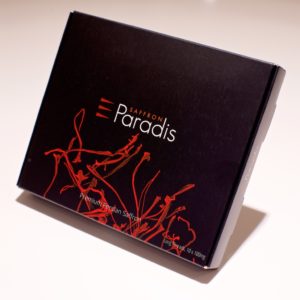
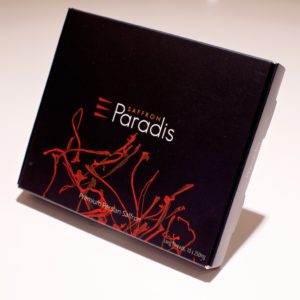
Negin, Super Negin/NIS – Paradis
Negin – all red stigmas.
NIS (Super Negin) – fullest all red, long thread; most luxurious grade – extensive processing requirements.
Paradis Saffron Liquid - Industry First

Finest Grade One Persian Saffron
The very best Grade One Persian Saffron is hand selected for lots that contain the highest amounts of key active ingredients.
All production is GMP compliant.

Proprietary Liquid Concentrate
Gentle, proprietary water based extraction technology under Nitrogen yields the world’s first and only highly concentrated saffron liquid extract.

Pure, Canadian Glacial Water
The fresh liquid saffron is diluted to the appropriate digestible format with pure Canadian Glacial Water, nothing else! No chemicals, no additives, no preservatives.

Innovative, Convenient Packaging
We package the final liquid into individual sachets with innovative “Easysnap” technology, further preserving our quality liquid product from air and light.
Grades of Saffron
There are 12 national Iranian standards regarding saffron, in addition to the third party International Standards Organization (ISO) 3632 Standards pertaining to Saffron; which classifies Saffron into four primary classifications of Quality.
There is also a current effort towards the establishment of an International WHO CODEX standard for saffron, due to ongoing issues with quality saffron authenticity and it’s true origins.
Paradis Saffron; both thread and liquid, is the very best Grade One Persian Saffron.
International Standards Organization: ISO 3632 Saffron
| ISO 3632 Saffron | Grade I | Grade II | Grade III | Grade IV |
| Crocin OD (440nm) (min.) | >190 | >150 | >110 | >80 |
| Safranal OD (330nm) (min.-max.) | 20-50 | 20-50 | 20-50 | 20-50 |
| Picrocrocin OD (257nm) (min.) | >70 | 55 | 40 | 30 |
| Moisture % (Max.) | <10 | <12 | <12 | <12 |
| Style Floral waste % (Max.) | <0.5 | 4 | 7 | 10 |
| Persian Description | Sargol, NIS/Negin | Sargol Grades II | Pushali Grades | Pushali Grades |
| Spanish Description | Coupe | Mancha | Rio | Standard, Sierra |